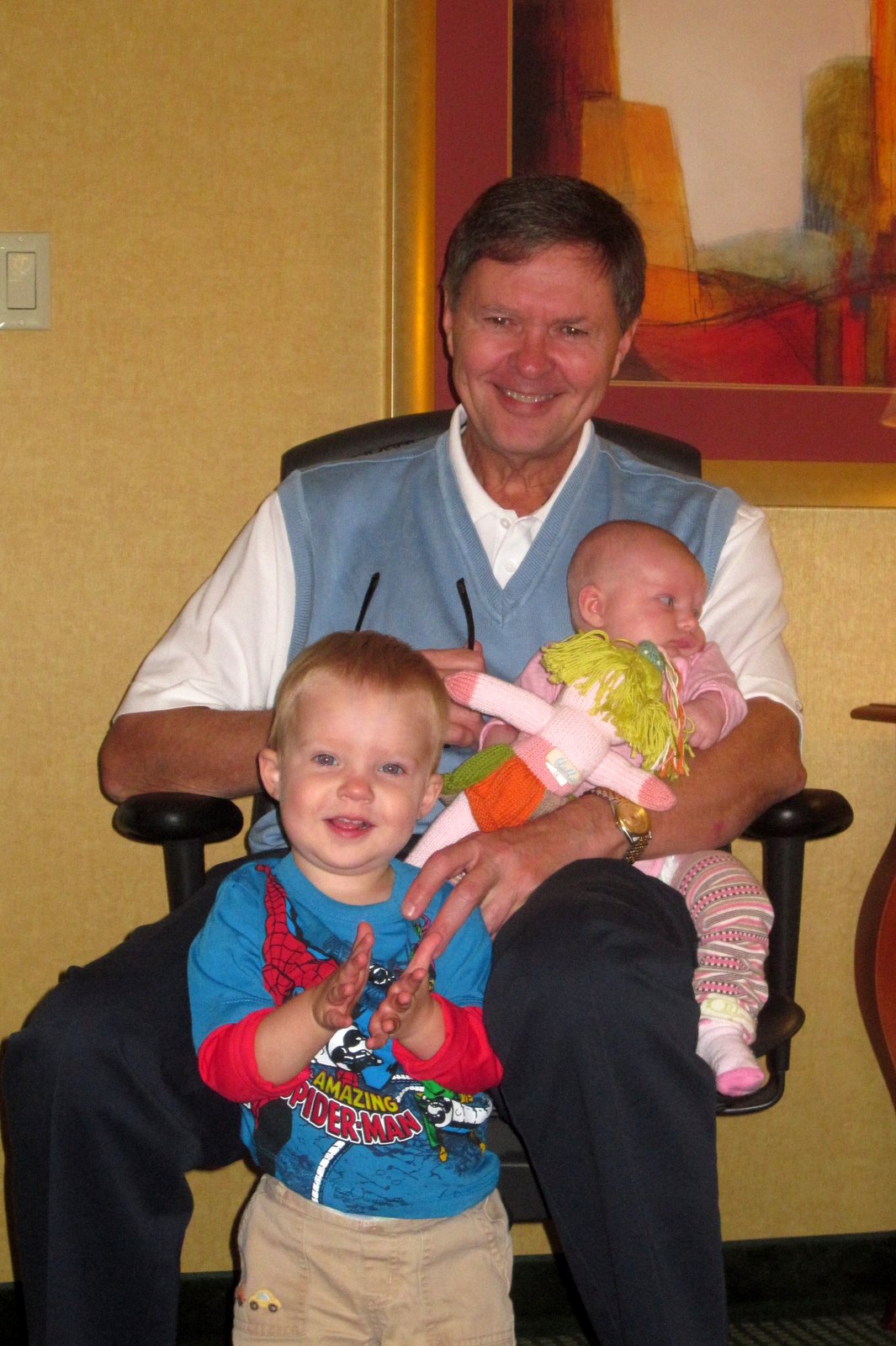
Wednesday, November 10, 2010

Semper Fidelis

November 10th, 1775. 235 years ago today our Beloved Corps was born in Tun Tavern, Philadelphia, when at the decree of the Continental Congress, Captain Samuel Nicholas, first commandant of the Marine Corps, offered guts and glory and a small tankard of ale to those few, proud strapping young men that came to be known as America's 911 Force: The United States Marines.

Not since the Spartans has a band of warriors had such a reputation for ferocity in battle and generosity at home. A breed apart, the Marines represent a fine distillation of what can be sustained by the fruit of democracy. The Marine Corps exists for two reasons alone: Making Marines, and Winning Battles.

I have always loved the imagery and cadence in the writing of John W. Thomason, a Marine Captain in World War I with the 1st Battalion, 5th Marine Regiment. His book, Fix Bayonets, if some of the finest American writing (and battlefield sketches) to come out of that war, and his essay, Leathernecks, excerpted below, is a great example.


***
LEATHERNECKS
by John W. Thomason 
THEY tell the tale of an American lady of notable good works, much esteemed by the French, who, at the end of June, 1918, visited one of the field hospitals behind Degoutte's Sixth French Army.  Degoutte was fighting on the face of the Marne salient, and the 2d American Division, then in action around the Bois de Belleau, northeast of Chateau Thierry, was under his orders.  It happened that occasional casualties of the Marine Brigade of the 2d American Division, wounded toward the flank where Degoutte's own horizon-blue infantry joined on, were picked up by French stretcher-bearers and evacuated to French hospitals.  And this lady, looking down a long, crowded ward, saw on a pillow a face unlike the fiercely whiskered Gallic heads there displayed in rows.  She went to it.

"Oh," she said, "surely you are an American!"

"No, ma'am," the casualty answered.  I'm a Marine."

The men who marched up the Paris-Metz road to meet the Boche in the spring of 1918, the 5th and 6th Regiments of United States Marines, were gathered from various places.  In the big war companies, 250 strong, you could find every sort of man, from every sort of calling.  There were North-westerners with straw-colored hair that looked white against their tanned skins, and delicately spoken chaps with the stamp of the Eastern universities on them.  There were large-boned fellows from Pacific-coast lumber camps, and tall, lean Southerners who swore amazingly in gentle drawling voices.  There were husky farmers from the corn-belt, and youngsters who had sprung, as it were, to arms from the necktie counter.  And there were also a number of diverse people who ran curiously to type, with drilled shoulders and a bone-deep sunburn, and a tolerant scorn of nearly everything on earth.  Their speech was flavored with navy words, and words culled from all the folk who live on the seas and the ports where our war-ships go.  In easy hours their talk ran from the Tartar Wall beyond Peking to the Southern Islands down under Manila; from Portsmouth Navy Yard-New Hampshire and very cold-to obscure bush-whackings in the West Indies, where Cacao chiefs whimsically sanguinary, barefoot generals, with names like Charlemagne and Christophe, waged war according to the precepts of the French Revolution and the Cult of the Snake.  They drank the eau de vie of Haute-Marne, and reminisced on sake, and vino, and Bacardi Rum-strange drinks in strange cantinas at the far ends of the earth; and they spoke fondly of Milwaukee beer.  Rifles were high and holy things to them, and they knew five-inch broadside guns.  They talked patronizingly of the war, and were concerned about rations.  They were the Leathernecks, the Old Timers; collected from ship's guards and shore stations all over the earth to form the 4 th Brigade of Marines, the two rifle regiments detached from the Department of the Navy by order of the President for service with the American Expeditionary Forces.  They were the old breed of American regular, regarding the service as home and war as an occupation; and they transmitted their temper and character and view-point to the high-hearted volunteer mass which filled the ranks of the Marine Brigade.

It is a pleasure to record that they found good company in the U. S. Army.  The 2d Division (U. S. Regular was the official designation) was composed of the 9th and 23d Infantry, two old regiments with names from all of our wars on their battle-flags, the 2d Regiment of Engineers-and engineers are always good-and the 12th, 15th, and 17th Field Artillery.  It was a division distinguished by the quality of dash and animated by an especial pride of service.  It carried to a high degree esprit de corps, which some Frenchman has defined as esteeming your own corps and looking down on all the other corps.  And although it paid heavily in casualties for the things it did-in five months about 100 per cent-the 2d Division never lost its professional character.

Seven years after, across the world from France, I met a major of the American General Staff, who was on the Paris-Metz road that last week in May, 1918, and saw the Marine Brigade.  "They looked fine, coming in there," he said.  "Tall fellows, healthy and fit-they looked hard and competent.  We watched you going in, through those little tired Frenchmen, and we all felt better.  We knew something was going to happen-" and we were silent, over Chilean wine, in a place on the South Pacific, thinking of those days and those men.

There is no sight in all the pageant of war like young, trained men going up to battle.  The columns look solid and businesslike.  Each battalion is an entity, 1,200 men of one purpose.  They go on like a river that flows very deep and strong.  Uniforms are drab these days, but there are points of light on the helmets and the bayonets, and light in the quick, steady eyes and the brown young faces, greatly daring.  There is no singing-veterans know, and they do not sing much-and there is no excitement at all; they are schooled crafts-men going up to impose their will, with the tools of their trade, on another lot of fellows; and there is nothing to make a fuss about.  Battles are not salubrious places, and every file knows that a great many more are going in than will come out again-but that goes along with the job.  And they have no illusions about the job.


There is nothing particularly glorious about sweaty fellows, laden with killing tools, going along to fight.  And yet-such a column represents a great deal more than 28,000 individuals mustered into a division.  All that is behind those men is in that column too:   the old battles, long forgotten, that secured our nation-Brandywine and Trenton and Yorktown, San Jacinto and Chapultepec, Gettysburg, Chickamauga, Antietam, El Caney; scores of skirmishes, far off, such as the Marines have nearly every year in which a man can be killed as dead as ever a chap in the Argonne; traditions of things endured and things accomplished, such as regiments hand down forever; and the faith of men and the love of women; and that abstract thing called patriotism, which I never heard combat soldiers mention-all this passes into the forward zone, to the point of contact, where war is girt with horrors.  Common men endure these horrors and overcome them, along with the insistent yearnings of the belly and the reasonable promptings of fear; and in this, I think, is glory.

In Charles the Second's time the English formed the first sea regiment-soldiers equipped as infantry, to serve on the sea in the fleet; to clear with musketry the enemy's decks and fighting-tops when the ship's of the line went into close action; to go ashore, and take up positions when the naval forces seized a base preliminary to land operations of the army.

Here by the way, comes the quip of old time:  "Tell it to the Marines."  They relate of Charles the Second that at Whitehall a certain sea-captain, newly returned from the Western Ocean, told the king of flying fish, a thing never heard in old England.  The king and the court were vastly amused.  But, the naval fellow persisting, the Merry Monarch beckoned to a lean, dry colonel of the sea regiment, with a seamed mahogany face, and said, in effect:  "Colonel, this tarry-breeks here makes sport with us stay-at-homes.  He tells us of a miraculous fish that forsakes its element and flies like a bird over the water."  "Sire," said the Colonel of Marines, "he tells a true thing.  I myself have often seen those fish in your Majesty's seas around Barbados-...."  "Well," decided Charles, "such evidence cannot be disputed.  And hereafter, when we hear a strange thing, we will tell it to the Marines, for the Marines go everywhere and see everything, and if they say is is so, we will believe it!"

The Continental Congress, on 10 November, 1775, authorized a corps of American Marines.  This was the first Federal armed force to be raised by the young nation, and it antedated both the Federal army and navy, which had until that time, been matters of individual commonwealths.  And since that date Marines have participated honorably in all American wars, and in some affairs, more or less interesting, where powder was burnt but which do not rate as wars.    


Captain Richard Dale's Marines served with John Paul Jones, and manned the fighting tops of his ship, the Bonhomme Richard.   The task of the Marines was to shoot down on the enemy ships, attending, in particular, to enemy officers.  When the crew of one ship boarded another, it was difficult or impossible to tell friend from foe from high above.  For that reason Marines officers adopted the peculiar device that resembled an embroidered cross so that their marksmen could tell friend from foe.  Look at any Marine officers barracks or dress hat.  You'll continue to see that same device embroidered there as a tribute to those long ago Marines who fought so gallantly some two-hundred years ago.  Marines love tradition. 

Those Marines in the fighting tops were also tasked, when possible, to drop explosive devices on the decks, or better yet through the hatches of enemy ships.  Such a device thrown from the fighting tops of the Richard set off the powder-magazine of H. M. S. Serapis. This event turned the tide of events in favor of the poor old Richard, in the fight off Flamborough Head.  There were United States Marines in Barney's naval force, formed across the Bladensburg Road, when Admiral Cockburn's people marched to burn Washington; and they stayed there until the line was turned by British regulars and they were all, including Barney, casualties;  it was the only material resistance the British met.  Marines marched to Mexico City in 1846; the red stripe on the blue trousers of officers and non-commissioned officers commemorates to this day service in that war.  Marines served in the Civil War very widely:  Marines died on Henry Hill at First Manassas  and on the fire-swept beaches in front of  Fort Fisher, and on the Mississippi around Vicksburg and Island No. 10.  Colonel Huntington's Marines took Guantanamo, landing from the U. S. S. Marblehead in 1898.  They marched to Peking in 1900, and were in the legation guard shut up there during the Boxer trouble.  Cuba knows them, and the Philippines.  They were ashore at Vera Cruz in 1914; every uneasy and volatile Wet Indian and Central American republic has become acquainted with them in a professional way, and their appearance at storm centers has always produced very presently a sweet tranquility.  The navy takes them there, and sends bluejackets and chow along always.  Every capital ship carries a guard of them.  Aboard ship, besides forming the nucleus of the ship's landing force, they man the secondary batteries, the five-inch guns; furnish guards of honor for the comings and goings of the admiral and distinguished visitors, and so forth; perform all manner of curious and annoying details; and post ship's sentries whose meticulous ideas about the enforcement of orders lacerate the souls of jolly mariners, seamen, and engineer ratings.  Normally, the strength of the corps is twenty per cent of the navy; just now there are about 19,000.  They constitute an organization within an organization, with their own commandant, who functions under the Secretary of the Navy, as a separate and distinct service like the U. S. Navy, as in the past, in time of war, the U. S. Coast Guard.  The rank and file are good enough Latinists to know what "Semper Fidelis"-which is their word-means; and any private will assure you the Marines are a corps d'elite.


In 1917, when trained Soldiers in the United States were at a premium, the Navy Department offered a Brigade of Marines for service in France; it was regarded desirable for Marine officers to have experience in large operations with the army; for it is certain that close co-operation between the army and the navy is a necessary thing in these days of far-flung battle lines.  The British distress at Gallipoli is a crying witness to this principle.  In a navy transport, therefore, U. S. S. Henderson, the 5th Regiment of Marines embarked for France in June, 1917,with the first armed American forces.  The 6th Marines followed.  The two regiments constituted the 4th Brigade, and served in the 2d Division.  U. S. Regular, until the division came home in August, 1919.  About 30,000 Marines were sent to France; some 14,000 of these were replacements to maintain the two regiments of the 4 th Brigade.  A brigade musters some 7,500 officers and men; this brigade took part in some very interesting events.

Elsewhere, I have written of the Marines in the war with Germany; how they went up, and what they did there, and how some of them came out again.  Being a Marine, I have tried to set forth simple tales without comment.  It is unnecessary to write what I think of my own people, nor would it be, perhaps, in the best taste.


And I have written of Marines in this war because they are the folks I know about myself.  Those battle-fields were very large, and a man seldom saw much or very far beyond his own unit, if he had a job in hand.  As a company officer, I always had a job.  There is no intent to overlook those very gallant gentlemen, our friends, the U. S. Army.  Their story is ours, too. 


***


Tuesday, November 9, 2010

This is what happens...

When Daddy makes poor little Caroline's bottles for school:


How am I going to explain this excessive esprit-de-corps to the ladies at daycare? I thought we had learned our lessons with the flippers episode..

Sons and Daughters

If you haven't been listening to the Decemberists, Cousin I think you might be missing out. I had already stumbled across them a couple of years ago, specifically 2 other songs from The Crane Wife, their first "big label" album. I'm sure I found them on NPR's All Songs Considered, where they topped the charts in 2006's "Best Album of the Year" alongside no less than Regina Spektor, Tom Waits, Dylan and Neko Case (NB: NPR listeners have great taste, always a good way to find new stuff).

But as chance and life would have it, I never followed up on that find, and missed out on this gem until it popped up on my Littlest Birds station on Pandora. This may or may not be your genre, but it is tight, energetic, lilting, and just plain good. By the time the quavery lead voice and the cymbals and the music crescendo in to the last 30 seconds, I just can't help but smile. Plain old feel-good music.

Monday, November 8, 2010

Growth Pics, Vol.2 Issue 13

Caroline has officially passed the 3 month mark:

more here.
Posted by Picasa

Sunday, November 7, 2010

Jackson Standard Time

We have really been doing the Lord's work trying to get Jackson to sleep like a normal human. The first 9 months, he didn't really sleep (at all), but for a while thereafter we seemed to be on the right track, going to bed at a reasonable hour and with reasonable effort, making it through the night, waking up around 6:30 or even 7 on the occasional weekend. But then, a month or two before Caroline was born he just started waking up earlier and earlier, to the point where a couple of weeks ago he rose at a dawn best determined by, say, Newfoundland time (GMT -2:30), demanding that breakfast be served RIGHT NOW. We've tried bringing him to bed with us (Fail), leaving him in there to scream (not much better), and everything in between.

Just a week or two ago, my brilliant wife Doc had the great idea of getting a binary image clock, with a picture of a sleeping bunny tucked soundly in bed that is illuminated during the night, and then a waking playing bunny that lights up when it is "OK" to get up. We've had mild success training him to (more or less) stay quiet and lay down until the waking bunny lights up, at which point in time he proudly leaps to his feet, shouts "UP!", and starts screaming if relief doesn't promptly appear. We've already convinced him that the kitchen doesn't open until 6:30 regardless of when he gets up, but he seems happy to catch 30 minutes of Sesame Street on the couch pre-Cheerios, while Dad nods off until Elmo shows up (c'mon: I challenge you to find anyone that can actually sleep through Elmo. I am a much bigger fan of Cookie and Snuffy, myself).

But then there comes along the timeless enemy of Daylight Savings Time. Or rather, it's evil twin Eastern Standard Time. Not that one is better or worse than the other, actually - it is just the changeup that throws us for a loop. How do you explain to a toddler that 6am is now just 5am? I have no idea.

So we gave it our best shot, changed the clocks over about halfway through UNC's miraculously lucky win over FSU, and instead of getting an hour of extra sleep (or bar time) like we used to in years gone by, we all had an extra hour of afternoon.  Then off to bed to await the impending disaster, the bunny clock faithfully set for the "new" 6am. And wouldn't you know it, he popped up at 5am and started screaming, but 3 minutes later quieted down and slept (or was at least quiet) until I walked in to check on him at 6:15 - or was it 7:15? (I am already losing track). Needless to say, I was surprised, and have absolutely no expectations about Monday morning. Whatever happens, we are apparently not in charge - we're all just on Jackson Standard Time.

UPDATE: Much to our amazement (and frustration, since our alarm still went off at 5:50), intrepid young Jack slept until 6:45 this morning. Great parenting or Luck o'the Irish? We'll let you decide.


You know, writing this blog post made me wonder a bit just how important Daylight Savings Time is. I mean, I would keep it around (if I didn't have children) but only for reasons of nostalgia, not anything approaching practicality. But it is funny how much we adults have just come to accept its strangeness, almost by rote force of habit. In the Fall, we say "sweet, another hour of sleep (or bar time), and in the Spring we grumble but we know that is the penance we pay for staying at Top of the Hill until 3am instead of 2. So we go forth and don't even consider for a minute "not playing along." Ah, the innocence of youth.

Friday, October 29, 2010

The De-Evolution of Man

Our little man in a monkey suit:


I think there is a certain age, before which Halloween is much more fun for the parents than for the kids...


But jack still manages to have a good time.

Tuesday, October 26, 2010

A subtitled beautiful autumn afternoon

Hmmmm, what to get into first?

Momma, can I go try to climb into Grandpa's boat?

Fine, I'll just push my sister around for awhile and try to hit as many potholes as possible.

Please don't let him do that again.

I bet Sissy would like to taste these rocks.

Quick, before Daddy sees...eat these. 

Hi.
Those rocks are giving me indigestion.

Monday, October 25, 2010


Henry Van Dyke (ca. 1852-1933)
from "The Fall of the Leaves"
I

In warlike pomp, with banners flowing,
The regiments of autumn stood:
I saw their gold and scarlet glowing
From every hillside, every wood.

Above the sea the clouds were keeping
Their secret leaguer, gray and still;
They sent their misty vanguard creeping
With muffled step from hill to hill.

All day the sullen armies drifted
Athwart the sky with slanting rain;
At sunset for a space they lifted,
With dusk they settled down again


Sunday, October 24, 2010

Peaceful beginnings


Thanks to the amazing photography of my old coach, Joel Furtek, I have been reminiscing on a part of my life that is long since past but that I still treasure dearly.  It just isn't possible to put into words all that my days rowing for UNC did to shape who I have become, but suffice it to say that it has probably been the most pivotal experience of my life.  Even compared to becoming a doctor, a wife, and a mother, rowing very literally unzipped the infant version of the person I am still becoming.  It led me to my lifelong friends, my husband, and my career, but I think most importantly, it taught me that no matter how isolatingly painful the work at hand may be, I am never going it alone and there are always people with me that depend on my ability to hold it together and find the humor and joy in the world that is rushing by not 6 inches from the gunnel.  There is just nothing more peaceful or re-energizing than skimming across a flat body of water, cutting through a cool misty fog with the pink glow of morning just beginning its dance across the horizon, and listening to the heartbeat of eight separate oars move the shell like one single organism. And to walk away one day, with the 'thunk' of the oarlocks and the splash of the catch still echoing in your mind, even years and years down the road.

Sunday, October 17, 2010

Cultural Sensitivity

Thanks to a wonderful book recommended by my bff, NurtureShock, Stephen and I have recently been discussing how to best raise our children to be culturally sensitive. So imagine our joy today, while shopping for plants at Lowes, when we came across this wonder of wonders:


An African American, Spanish-speaking Santa. Now if only he was singing "Dradle dradle dradle, I made it out of clay..."

Saturday, October 16, 2010

Easy in Hindsight

What's that noise?  Oh wait, it's silence.  As Matilda and I were working in the yard today, scratching one thing after another off our to-do list, with our littlest one strapped very comfortably to my chest, we couldn't help but comment as we would pass each other on how easy having only one child has become.  Our eldest offspring is spending the weekend at Camp Sparty and we were assured tonight by Activities Director Bud (aka Grandpa), as we finished off our steaks (eaten in peace and at a luxuriously slow pace), that he had not expressed one iota of longing for his dear old parents.  I don't think the 2 hour delay to his normal bedtime or the chocolate Cheerios for breakfast or the naps in their king-sized bed with the dog are helping to instill a healthy dose of homesickness in our boy.  And, I must admit, though I am pleased as punch that he's getting along swimmingly with his grandparents, there is part of me that is slightly disappointed that he hasn't at least poured one out for his momma.  Now, if his sister will sleep longer than 4 hours in a row tonight, I'm sure that slight disappointment will be properly alleviated by some decent and much needed R&R.

Wednesday, October 13, 2010

Monday, October 4, 2010

Third Party Rising


Excellent op-ed in this weekend's NYT by Thomas Friedman:

A friend in the U.S. military sent me an e-mail last week with a quote from the historian Lewis Mumford’s book, “The Condition of Man,” about the development of civilization. Mumford was describing Rome’s decline: “Everyone aimed at security: no one accepted responsibility. What was plainly lacking, long before the barbarian invasions had done their work, long before economic dislocations became serious, was an inner go. Rome’s life was now an imitation of life: a mere holding on. Security was the watchword — as if life knew any other stability than through constant change, or any form of security except through a constant willingness to take risks.”
It was one of those history passages that echo so loudly in the present that it sends a shiver down my spine — way, way too close for comfort.
...
There is a revolution brewing in the country, and it is not just on the right wing but in the radical center. I know of at least two serious groups, one on the East Coast and one on the West Coast, developing “third parties” to challenge our stagnating two-party duopoly that has been presiding over our nation’s steady incremental decline.
...
Obama probably did the best he could do, and that’s the point. The best our current two parties can produce today — in the wake of the worst existential crisis in our economy and environment in a century — is suboptimal, even when one party had a huge majority. Suboptimal is O.K. for ordinary times, but these are not ordinary times. We need to stop waiting for Superman and start building a superconsensus to do the superhard stuff we must do now. Pretty good is not even close to good enough today.
Entire op-ed is here.

Sunday, October 3, 2010

Oct. 3, 1990

And from the "Headlines That Make Me Feel Old Department," we have the following news update:

Germans Celebrating 20th Anniversary of Reunification

The Berlin Wall came down almost one year before reunification.

Apparently it has been 20 years since we (literally) watched the Berlin Wall fall. And it has been 12 years since my mother thought we were bieng followed by KGB agents plotting our demise, just outside the Brandenburg Gate. Man, where does all the time go..? Sort of makes you miss the Red Army.